
PETROLEUM SYSTEMS FIELD COURSE IN THE LUSITANIAN BASIN (portugal)
From source to reservoir, trap geometries, seal properties and thermal maturation associated with burial and magmatism.
(On-demand field-based training course)
Introduction
This 4-day field trip takes place in the Lusitanian Basin (Portugal), in the central coastal Portuguese region between Serra de Aires e Candeeiros, Peniche, Santa Cruz, Nazaré, Mafra and Sintra, with the following goals:
Understand the paleogeographic and environmental variability of the Jurassic and Cretaceous sedimentary sequence in the Lusitanian Basin; a useful proxy for interpretation in less exposed Central-North Atlantic basins;
1) Observe different types of source rocks with potential to generate hydrocarbons from the Jurassic (Lower and Upper) and Cretaceous periods in the Lusitanian Basin;
2) Understand concepts of hydrocarbon maturation, migration and trapping while observing real examples in the field with practical exercises;
3) Observe in detail on outcrop different types of reservoirs (clastic and carbonate environments) and their main characteristics, both in the Jurassic and Cretaceous sequences;
4) Unique chance to visit an exhumed paleo-oil field on a flank of a salt diapir, where it is possible to observe and understand in the outcrop concepts such as closure/trap, regional seal, intra-reservoir seal, spill point, gross rock volume, net-to gross and culminating with a simple deterministic STOIIP calculation.
5) Observe and discuss the implications of magmatism on petroleum systems, including examples on source rock maturity and exhaustion, fracturing and re-crystallization of potential reservoirs and migration.
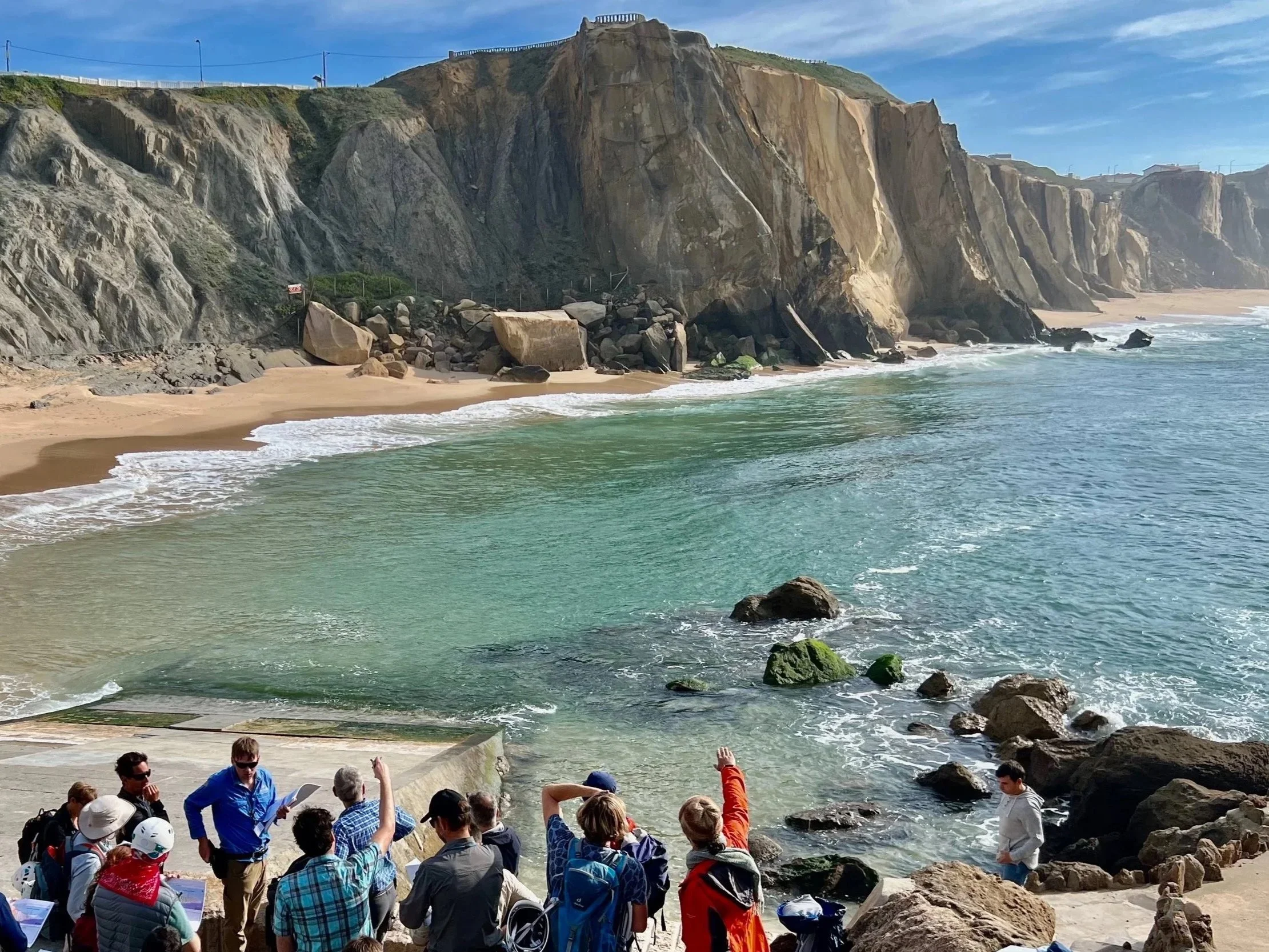
Upper Jurassic marine source rocks and fluvio-deltaic Sequence at Praia de Santa Cruz.
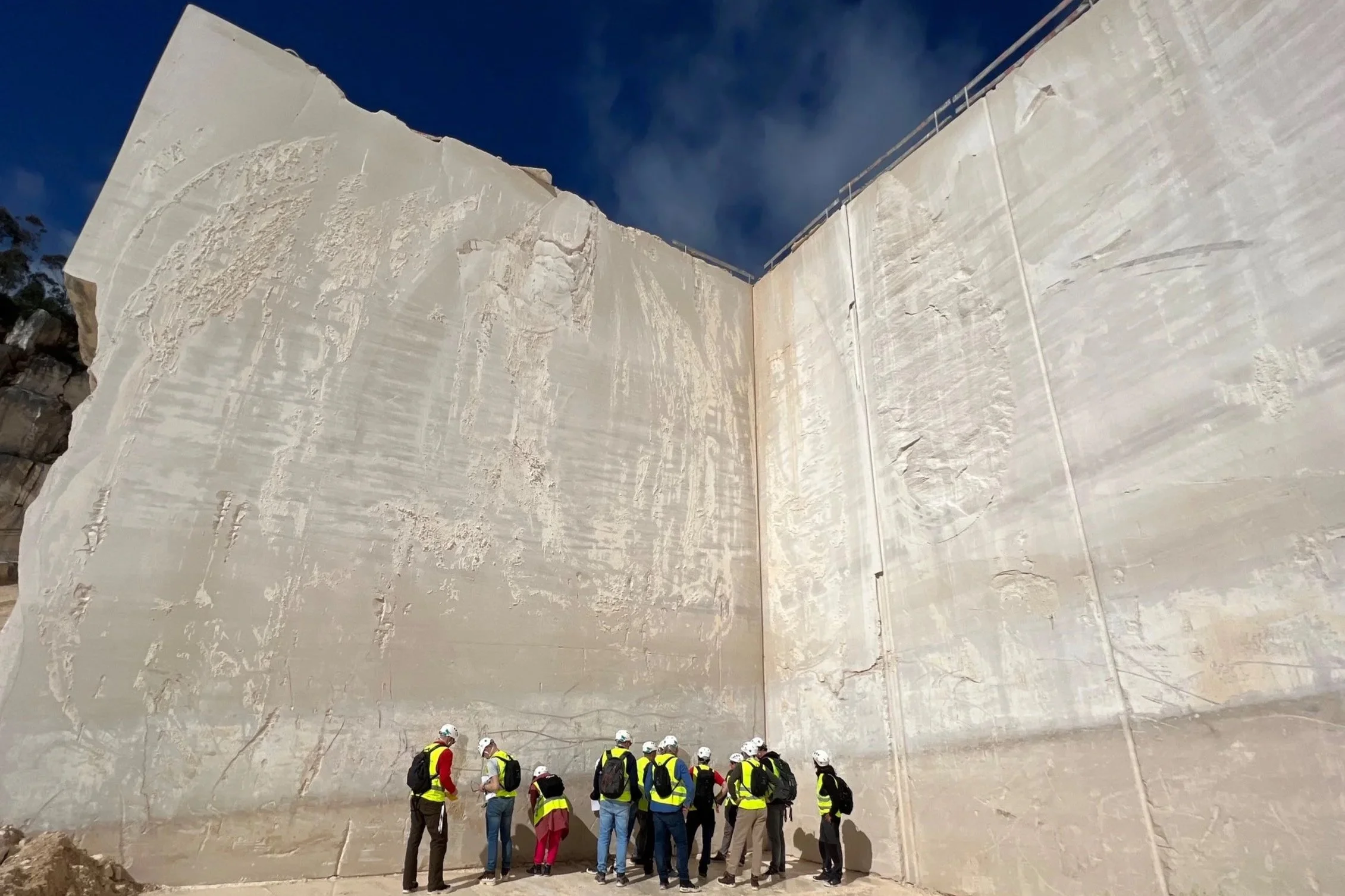
Reservoir properties variability in high energy carbonate facies at Serra dos Candeeiros.
Course Characteristics
Physical requirements: Easy to moderate. Participants will be required to walk a maximum of 1 km at some localities mostly over easy relatively flat terrain.
Duration: 4 days
Type: Fieldwork and evening talks. Coastal and inland outcrops and quarries (active or abandoned).
Area: Central Costal Portugal
Target audience: Geologists, Geoscientists, geophysicists, geomodellers, petroleum system modellers/analysts and reservoir engineers.
Pre-requisites: Basic geology and petroleum geology concepts.
What’s included: Transportation in mini-bus with professional driver, meals, accommodation in 4 star hotel (4 nights) , HSE Assessment and Risk Mitigation Plan, field guide, personal insurance, Personal Protection Equipment (PPE) bag (hard hat, reflective vest, emergency blanket, waterproof whistle) and walking poles (at request).
Number of participants: Minimum of 12 and maximum 18 persons + 2 guides / instructors.
Course Cost: 3600 € (excl. tax). Special discount rates for groups > 14 participants.
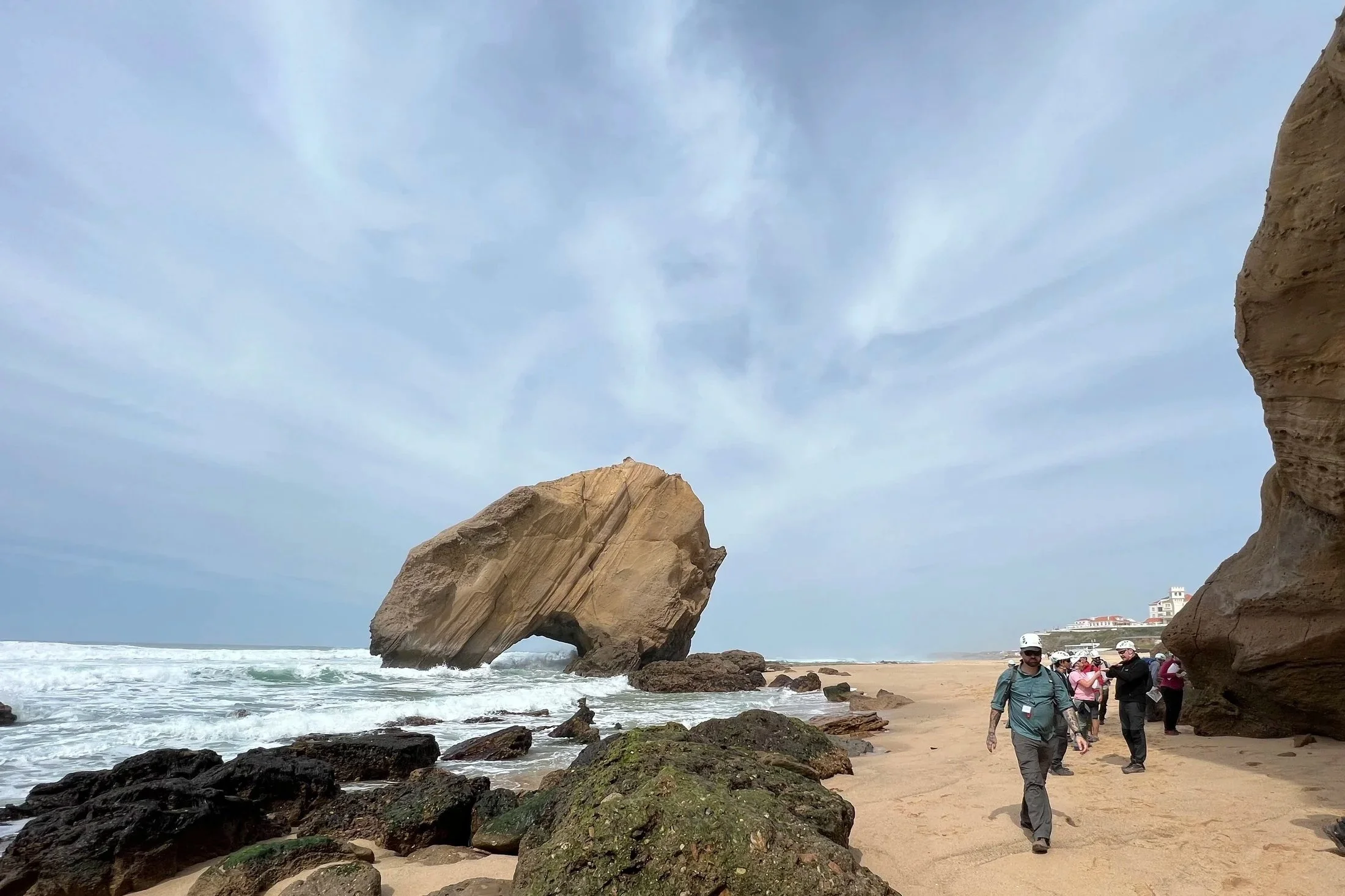
Clastic reservoir channel bypassing pro-delta deposits at Praia de Santa Cruz.
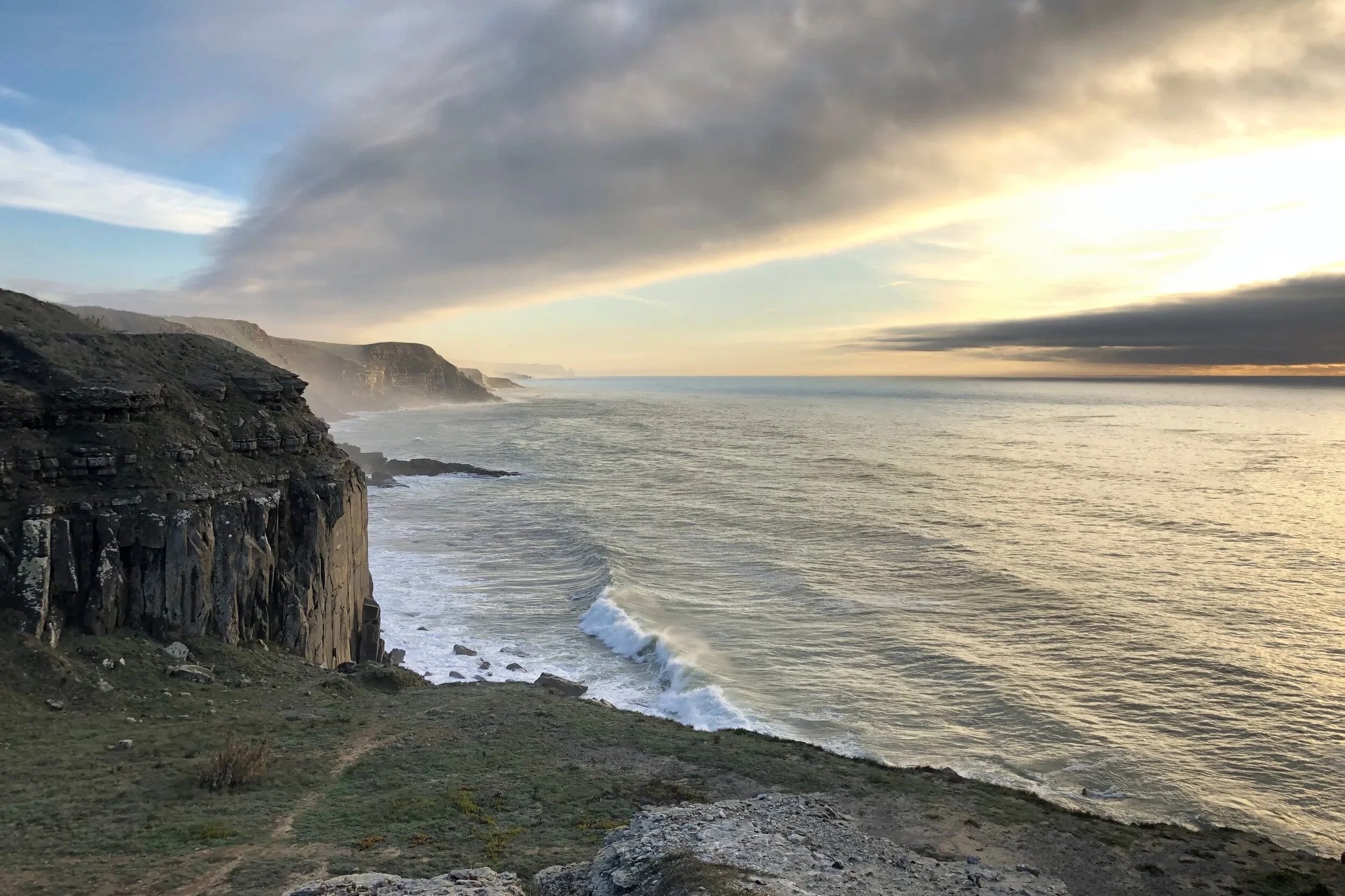
Lomba dos Pianos trachy-basaltic sill concordant with Albian to Cenomanian limestones and marls.
Instructors
Pedro Barreto: Founder of Geo Logica, graduated in Geology from University of Lisbon and MSc in Tectonics, Royal Holloway, University of London. Former Senior Structural Geologist at CGG NPA Satellite Mapping and Senior New Ventures & Exploration Geologist at Partex O&G where he was Lead Project Geologist for Portuguese exploration. Expert in structural geology from rifting to compressional settings with research and fieldwork in Portugal, Africa, Middle East and South America. Co-author of several publications and presentations on rifting and salt tectonics and implications on exploration, development and exploitation of natural resources for energy production and storage.
Tiago Cunha: Degree in Geology from Lisbon University (PT) and PhD in Marine Geophysics from Oxford University (UK). 15+ years’ experience in basin and petroleum systems modelling in sedimentary basins around the world combining a wide range of observational and modelling techniques, integrating geological, geophysical and geochemical data. 10+ ISI publications and numerous presentations at international meetings. Currently working at I.G.I Ltd, focused in the tectonic and thermal evolution of sedimentary basins and its implications for the petroleum systems. Promoting and developing novelty research and applications for the natural hydrogen and CCS industries.

Pliensbachian to Toarcian distal carbonate ramp to outer to middle submarine fan calciturbidites.

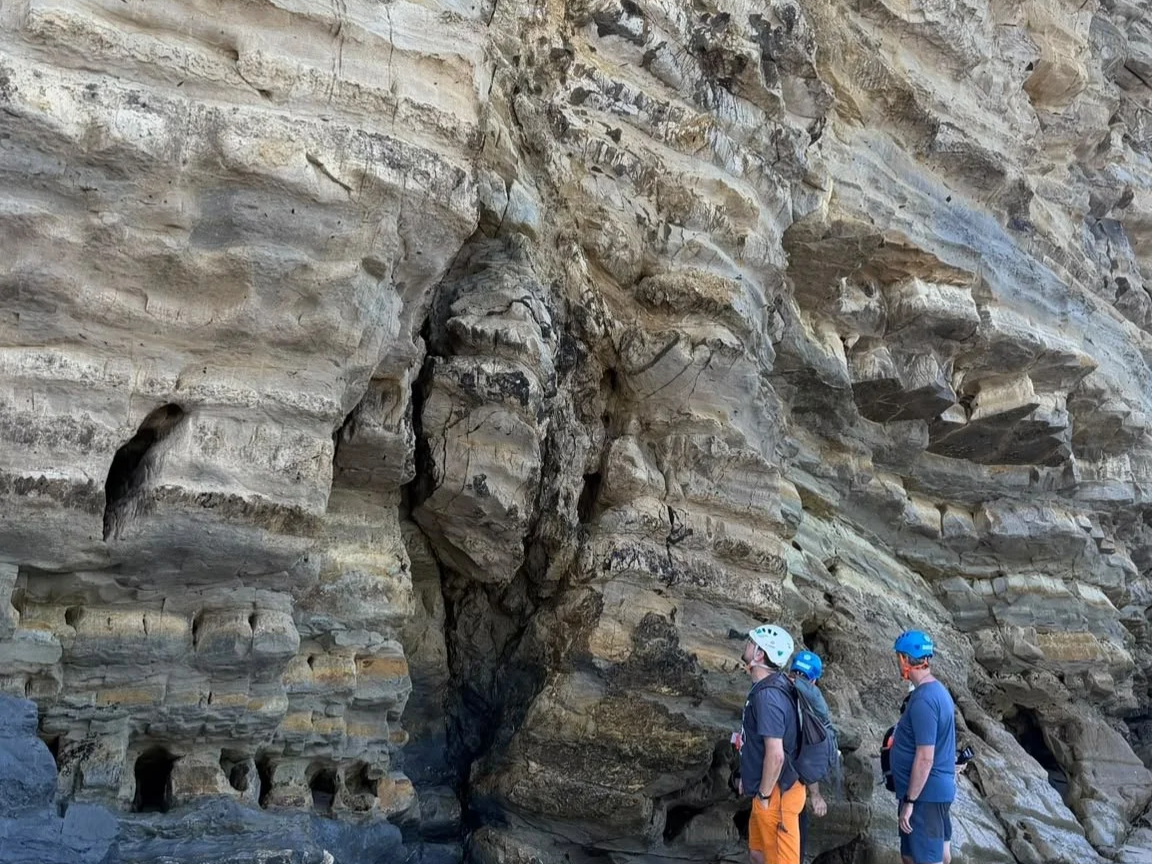
High angle fault affecting Pliensbachian deep marine limestones, marls and black shales at Portinho da Areia do Norte.
MAIN TOPICS COVERED ON FIELD TRIP
Basic concepts of petroleum systems and its relation with sedimentation, magmatism and tectonic events;
Carbonate and clastic reservoirs.
Different types of carbonate environments and their main characteristics on outcrop;
Paleogreographic distribution of carbonates and mix clastic systems.
Source rocks distribution in carbonate and clastic systems and potential to generate hydrocarbons;
Reservoir & seal properties changes in carbonate and clastic systems;
Fractured reservoirs.
Fluid flow along faults;
Hydrocarbon trap geometries against salt diapirs
Reservoir damage around salt diapirs;
Source rock maturation and degradation processes
Effect of magmatism in petroleum systems.
Implications of field work observations for seismic imaging, interpretation and modelling of petroleum systems
Field Trip Program
Day 1
-
Departure from Lisbon Airport (8:30 am)
Fórnea
Vale de Florido
Lunch at Pé da Pedreira
Vale de Meios
Rio Maior salt flats
Hotel Alcobaça
-
Serra dos Candeeiros and Planalto de Santo António (Stops 1 to 4): Transect across carbonate depositional environments, and implications for migration and carbonate reservoir quality.

Panoramic perspective of an outer-ramp to shallow water sequence at Fórnea Creek.

Lagoonal to peritidal facies at Vale de Meios.

Brine well with shadoof in the centre of Rio Maior Salt extraction flats at Marinhas de Sal.
Day 2
-
Portinho da Areia do Norte
Ponta do Trovão
Lunch at Cabo Carvoeiro
Praia da Consolação
Praia de Santa Cruz
Evening presentation
Hotel at Alcobaça
-
Peniche Peninsula and Santa Cruz Beach (Stop 5 to 8): Marine source rocks, maturation, migration pathways and clastic reservoir-seal sequences.
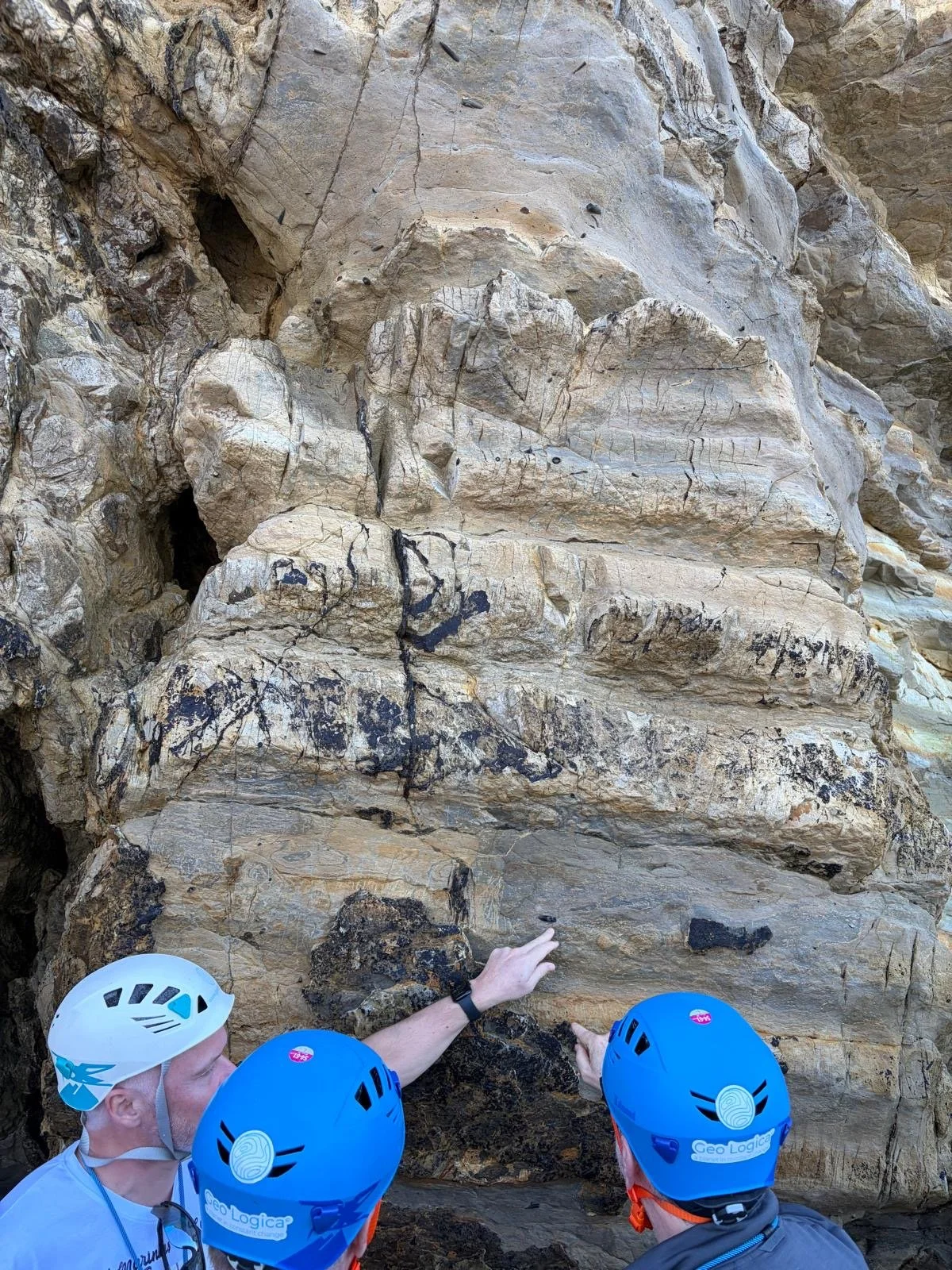
Hydrocarbons flow along fracture network developed on the hanging wall of an inverted fault at Portinho da Areia do Norte.

Toarcian GSSP Golden Spike on distal carbonate ramp to outer to middle submarine fan calciturbidites at Ponta do Trovão.
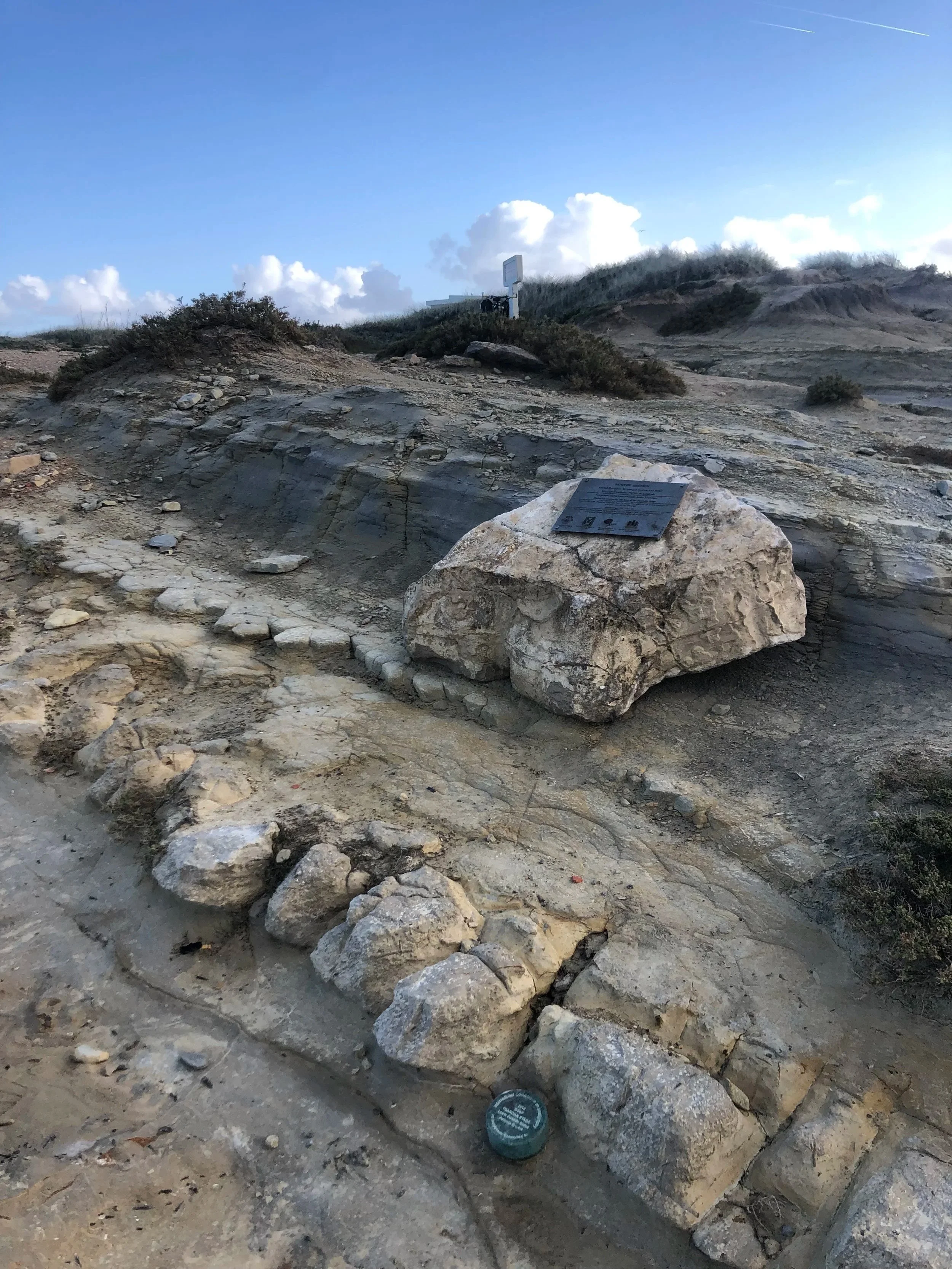
Toarcian GSSP Golden Spike on distal carbonate ramp to outer to middle submarine fan calciturbidites at Ponta do Trovão.
Day 3
-
Praia de Pedrogão
Praia Pedras Negras
Lunch at Praia Paredes de Vitória
Mina do Azeche
Nazaré headland
Hotel Alcobaça
-
São Pedro de Moel, Pedrogão Beach and Nazaré (Stops 9 to 12): Traps/ closures, types of seals, spill point and gross rock volume Vs Net-to-gross and terrestrial source rocks.

Middle Jurassic-Late Jurassic unconformity at Pedrógão Beach with carophytes and Source Rock levels.

Oil impregnated folded dolomitic black shales within an abandoned quarry at São Pedro de Moel Diapir, Praia das Pedras Negras.

Southern contact of São Pedro de Moel diapir with bitumen-impregnated reservoirs and intra-reservoirs seals.
Day 4
-
Cabeço de Montachique
Ribeira de Fanhões
Lunch at Aldeia Pequena
Cascata do Mourão
Lomba dos Pianos
Evening presentation
Hotel at Alcobaça
-
Mafra and Sintra Area (Stops 13 to 16): The impact of magmatism on petroleum systems (source rock maturity, petroleum migration, reservoir quality and trapping).
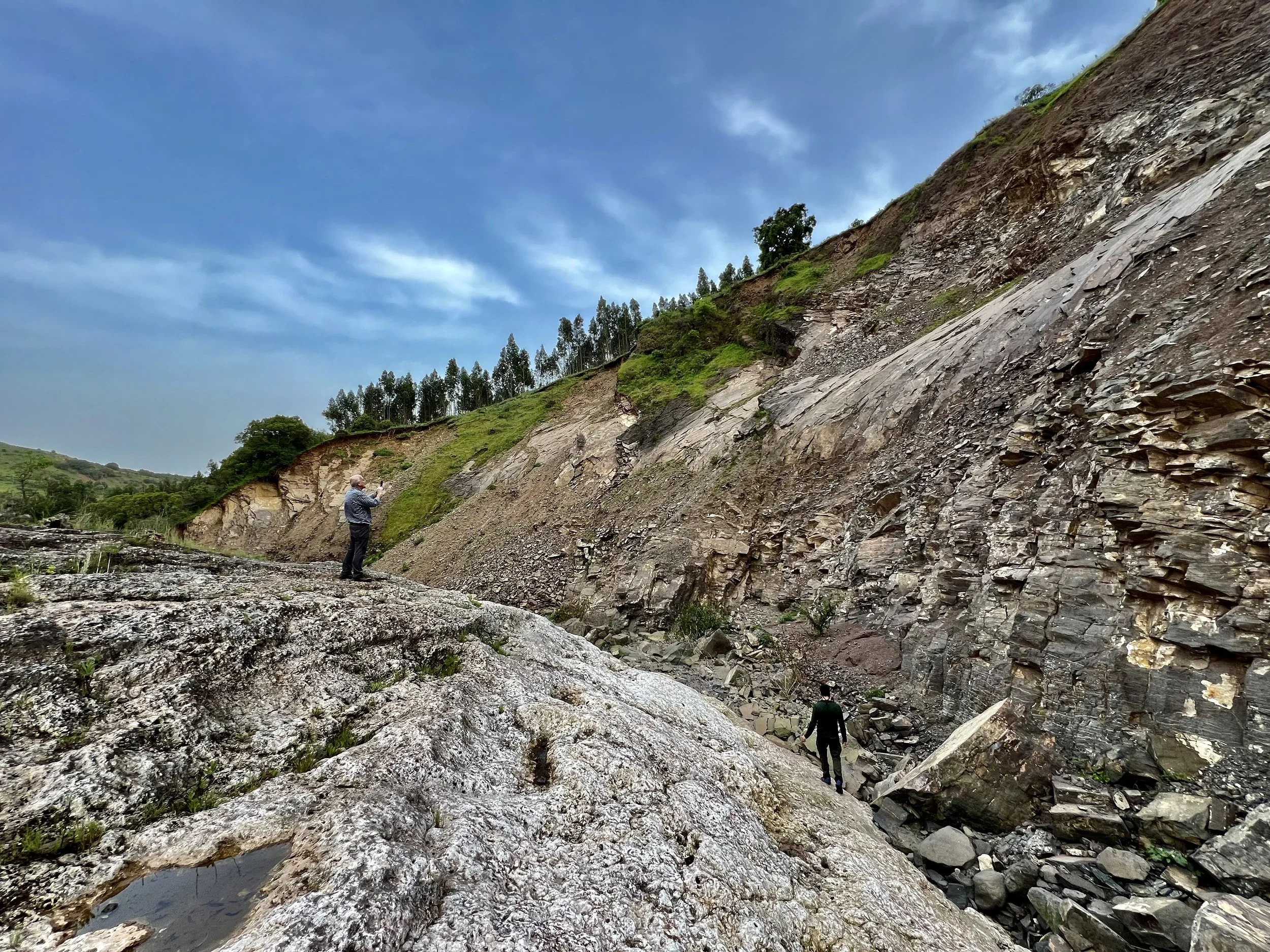
Detail of folded lava flow around carbonate paleo high at Ribeira de Fanhões.

Penedo do Lexim Late Cretaceous volcanic plug showing prismatic jointing and unloading joints.
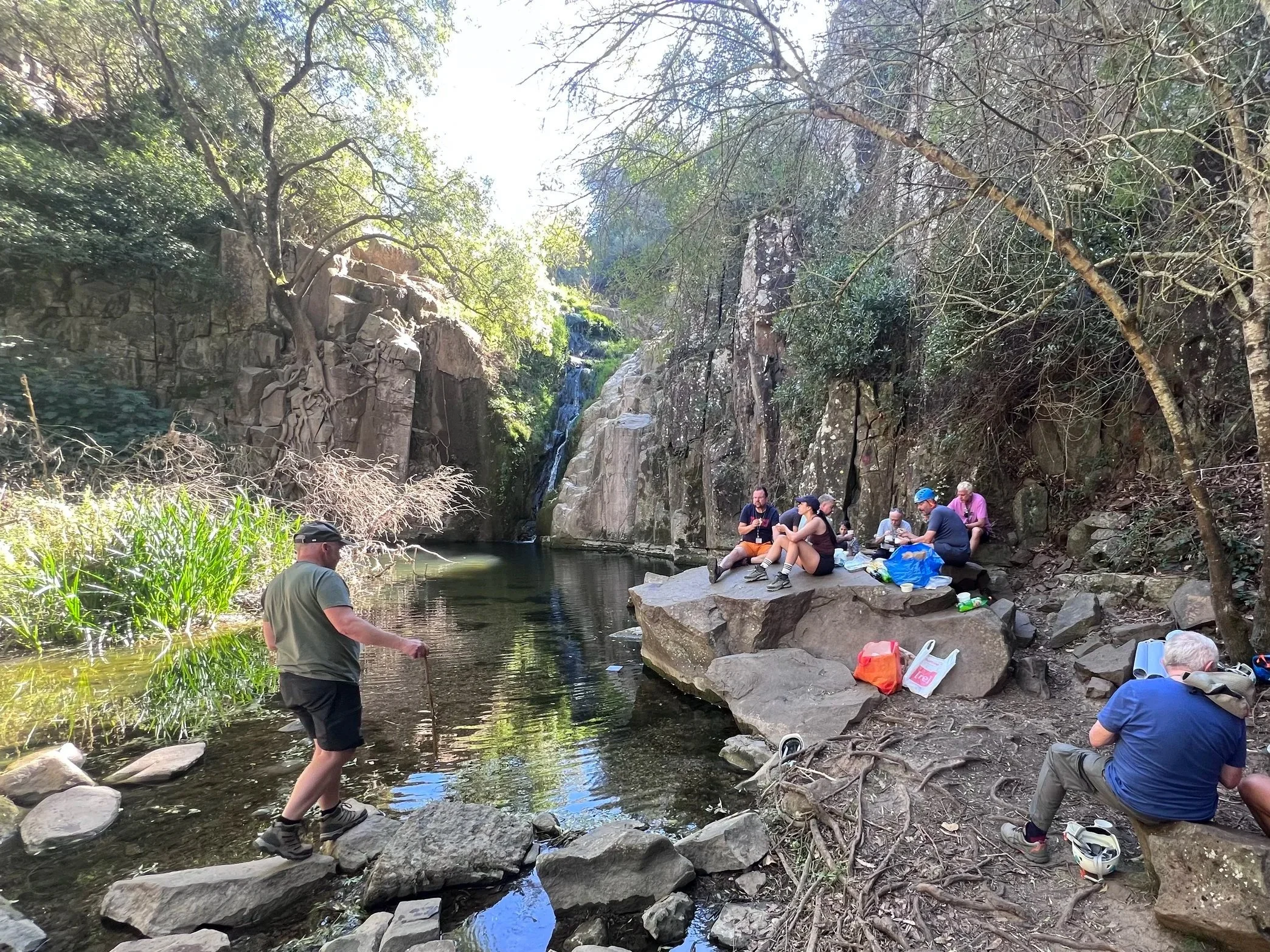
Middle Cenomanian black shales interbedded with limestones beneath trachybasalitc sill with columnar joints at Cascata do Mourão.
References
Alves, T.M., Moita, C. Cunha.T., Monteiro, J.H., Pinheiro, L.K.M. 2006. Mesozoic-Cenozoic evolution of the North Atlantic continental slope basins: The Peniche Basin, Western Iberian Margin. AAPG Bulletin 90, 31-60.
Azerêdo, A. C., Inês, N., Bizarro, P. (2020). Carbonate reservoir outcrop analogues with a glance at pore-scale (Middle Jurassic, Lusitanian Basin, Portugal). Marine and Petroleum Geology, 111, 815-851, available online 23 August 2019. https://doi.org/10.1016/ j.marpetgeo.2019.08.034
Azerêdo, A. C. (2015). Análise de reservatórios carbonatados em afloramento (Bacia Lusitânica) e outros aspectos aplicados à exploração petrolífera. Livro-guia, Módulo “Trabalho de campo na Bacia Lusitânica", Curso de Formação Avançada em Geo-Engenharia de Reservatórios Carbonatados, FCUL/Galp/Petrobras, 64 p. ISBN: 978-989-20-5833-7.
Azerêdo, A. C. (2007). Formalização da litostratigrafia do Jurássico Inferior e Médio do Maciço Calcário Estremenho (Bacia Lusitânica). Comunicações Geológicas, 94, 29-51.
Azerêdo, A. C., Ramalho, M. M. (2005). The Jurassic Geological Heritage at the Parque Natural das Serras de Aire e Candeeiros (Central Portugal): selected examples from a broad spectrum. In: Henriques, M. H., Azerêdo, A. C., Duarte, L. V., Ramalho, M. M. (Eds): Jurassic Heritage and Geoconservation in Portugal: selected sites. Field trip guidebook (Excursion C), IV International Symposium ProGEO on the Conservation of the Geological Heritage, Braga,17-22.
Azerêdo, A. C., Cabral, M. C. (2004). Bio-sedimentary signatures of high-frequency salinity/subaerial exposure changes: examples from the Oxfordian of Portugal (Cabaços Formation). Rivista Italiana di Paleontologia e Stratigrafia, 110, 1, 231-238.
Azerêdo, A. C., Duarte, L. V., Henriques, M. H., Manuppella, G. (2003). Da dinâmica continental no Triásico aos Mares do Jurássico Inferior e Médio. Cadernos de Geologia de Portugal, Instituto Geológico e Mineiro, Lisboa, 43 pp., 7 ests.
Azerêdo, A. C., Wright, V. P., Ramalho, M. M. (2002). The Middle-Late Jurassic forced regression and disconformity in central Portugal: eustatic, tectonic and climatic effects on a carbonate ramp system. Sedimentology, 49 (6), 1339-1370.
Azerêdo, A. C. (1998). Geometry and facies dynamics of Middle Jurassic carbonate ramp sandbodies, West-Central Portugal. In: V. P. Wright & T. Burchette (eds), Carbonate Ramps. Geological Society, London, Special Pubication., 149, 281-314.
Barreto, P., Pereira, R., Silva, C. 2018. The Algarve Pre-salt Sequence (pre-Hettangian): New insights for hydrocarbon exploration. Presentation. AAPG Europe Regional Conference 2018, 2-3 May, Lisbon, Portugal.
Davison, I., & Barreto, P., (2020). Deformation and sedimentation processes, and hydrocarbon accumulations on upturned salt diapir flanks in the Lusitanian Basin, Portugal. Petroleum Geoscience, DOI: https://doi.org/10.1144/petgeo2019-138
Davison, I., & Barreto, P., (2019). Exhumed Portuguese oil field suggests conjugate potential. GEOExPro, volume 16, no.3 pp. 38-40.
Davison I & Barreto, P. (2019). Salt tectonics and hydrocarbon accumulations trapped on diapir flanks in the Lusitanian Basin, Portugal. Salt Tectonics, Associated Processes, and Exploration Potential: Revisited 1989-2019. GCSSEPM Annual Perkins Rosen Research Conference, Salt Tectonics, electronic files only, p. 300-313.
Duarte, L.V., Silva, R. L., Azerêdo, A. C., Comas-Rengifo, M. J., Mendonça-Filho, J. G. (2022). Shallow-water carbonates of the Coimbra Formation, Lusitanian Basin (Portugal): contributions to the integrated stratigraphic analysis of the Sinemurian sedimentary successions in the western Iberian Margin. Comptes Rendus Géoscience- Sciences de la Planète. In Lézin, C., Saucède, T. (eds), Special Issue Integrated stratigraphy of the Jurassic and the Cretaceous: a tribute to Jacques Rey, 1-18, published online 13 October 2022, https://doi.org/10.5802/ crgeos.144
Duarte, L.V., Silva, R.L., Oliveira, L.C.V., Comas-Rengifo, M.J., Silva, F. (2010). Organic-rich facies in the Sinemurian and Pliensbachian of the Lusitanian Basin, Portugal: Total Organic Carbon distribution and relation to transgressive- regressive facies cycles. Geologica Acta, 8(3), 325–340.
Duarte, L.V., Soares, A.F. (2002). Litostratigrafia das series margo-calcárias do Jurássico Inferior da Bacia Lusitânica (Portugal). Comunicações do Instituto Geológico e Mineiro, 89, 135–154.
Duarte, L.V. (1997). Facies analysis and sequential evolution of the Toarcian-Lower Aalenian series in the Lusitanian Basin (Portugal). Comunicações do Instituto Geológico e Mineiro, 83, 65–94.
Ellwood, P.M., 1987. Sedimentology of the Upper Jurassic Abadia Formation and Its Equivalents, Lusitanian Basin, Portugal. Unpublished Ph.D. Thesis, Open University, Milton Keynes, 3 volumes.
Mata, J., Alves, C.F., Martins, L., Miranda, R., Madeira, J., Pimentel, N., Martins, S., Azevedo, M.R., Youbi, N., deMin, A., Almeida, I.M., Bensalah, M.K., Terrinha, P., 2015. 40Ar 39Ar ages and petrogenesis of the West Iberian Margin onshore magmatism at the Jurassic-Cretaceous transition. Lithos, 236-237, 156-172.
Pena dos Reis & Pimentel, 2014. Analysis of the petroleum Systems of the Lusitanian Basin (Western Iberian Margin) - a tool for deep offshore exploration. In Sedimentary basins: origin, depositional histories, and petroleum systems. GCSSEPM Perkins Annual Research Conference, 20 pages.
Pereira, R., Rosas, F., Mata, J., Represas, P., Escada, C., and Silva, B., 2021b, Interplay of tectonics and magmatism during post-rift inversion on the central West Iberian margin (Estremadura Spur): Basin Research, v. 33,p. 1497–1519,
Pereira, R., Mata, J., Ramalho, R.S., Rosas, F.M., Sil- va, B., Represas, P., and Escada, C., 2022, Nature, timing and magnitude of buried Late Cretaceous magmatism on the central West Iberian margin: Basin Research, v. 34, p. 771–796.
Ravnås, R., Windelstad, J., Mellere, D., Nøttvedt, A., Sjøblom, T.S., Steel, R.J., and Wilson, R.C.L., 1997. A marine late Jurassic syn-rift succession in the Lusitanian Basin, western Portugal - Tectonic significance of stratigraphic signature. Sedimentary Geology, 14, 237 - 266.