
Hydrogen Field Course: from Source To Storage
(April, 12th- 16th, 2027)
From Mantle Rocks to H₂: Serpentinization Processes in the Ronda Peridotites, Spain (Generation, migration, trapping and accumulation mechanisms) and hydrogen storage in Salt Structures in Algarve Basin, Portugal.
Introduction
This is a 4 day field trip focusing on the main aspects of Natural Hydrogen generation, migration and trapping, as well as concepts and principles of Underground Hydrogen Storage in Salt structures.
Participants will observe outcrops where serpentinization process took place in mantle rocks, visit localities where hydrogen is actively being released from alkaline hot springs, understand thermodynamics of H2 generation, and learn to recognise geophysical signatures associated with H2 in the Ronda Peridotite Massif. In addition, we will demonstrate the processes that control H2 migration and trapping using fully coupled poro-elasto-plastic models, with field examples along the coast of Algarve, and explain the concepts of Underground Hydrogen Storage (UHS) inside salt structures inside the Loulé Salt Mine (Algarve Basin)..
This would be an intensive field-based training combining theoretical sessions with hands-on experience, with multiple in-class and field exercises and seminar sessions.
This course is based on research and field work undertaken by the instructors over the past decade in the Ronda Massif (Spain) and Algarve Basin (Portugal). Participants will understand concepts while observing world class field examples:
Field traverse across the Ronda Peridotites;
Visit to hyperalkaline springs (pH greater than 11) associated with ongoing serpentinization;
Observation of travertine deposits and carbonate precipitation;
Field section along the flank Albufeira Diapir where conventional reservoirs, seals and trap are exposed along coastal outcrops;
Visit a salt mine inside a squeezed diapir beneath the centre of Loulé City in Algarve;
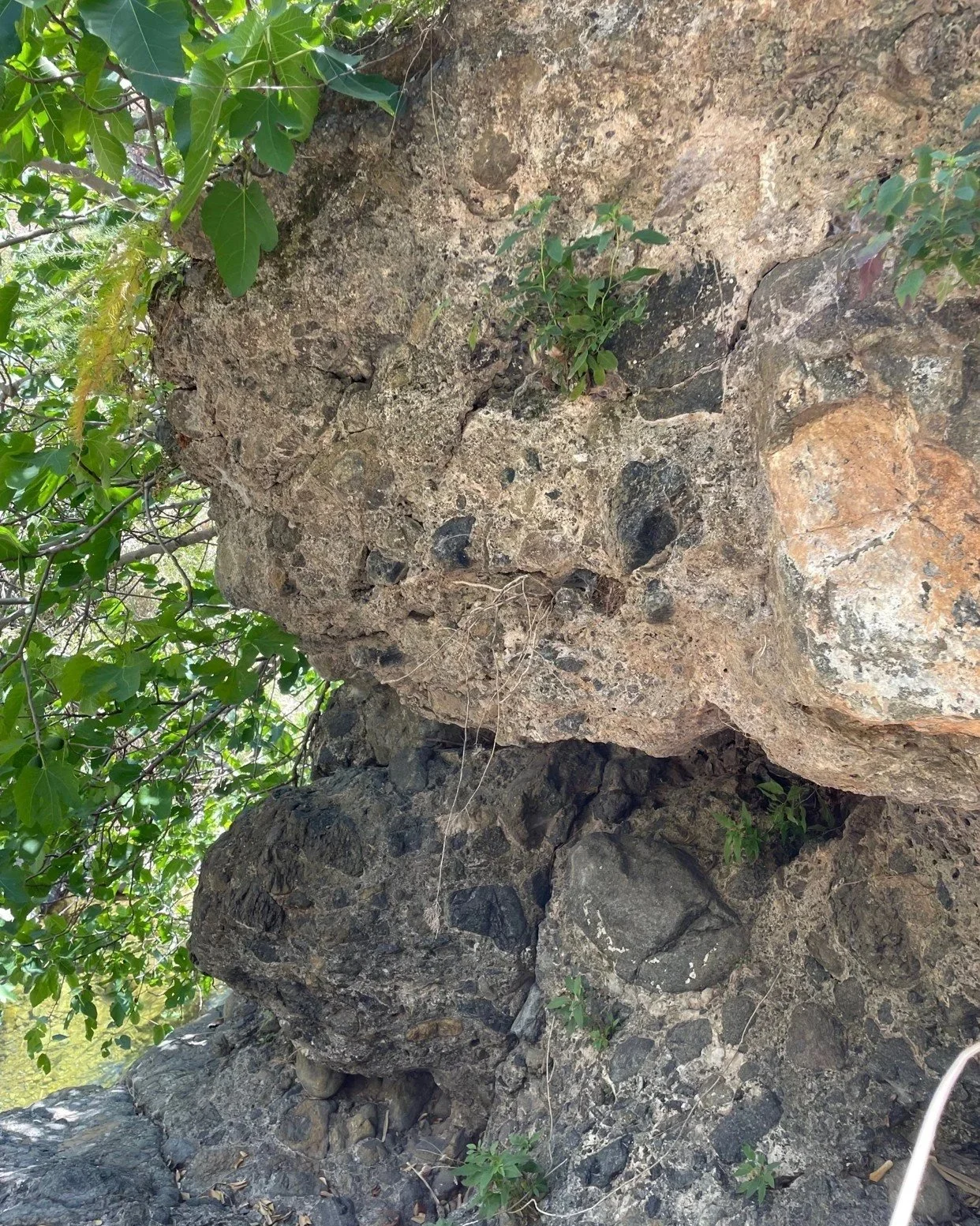
Fault brecha in gas bearing alkaline springs (Ronda Massif, Spain.

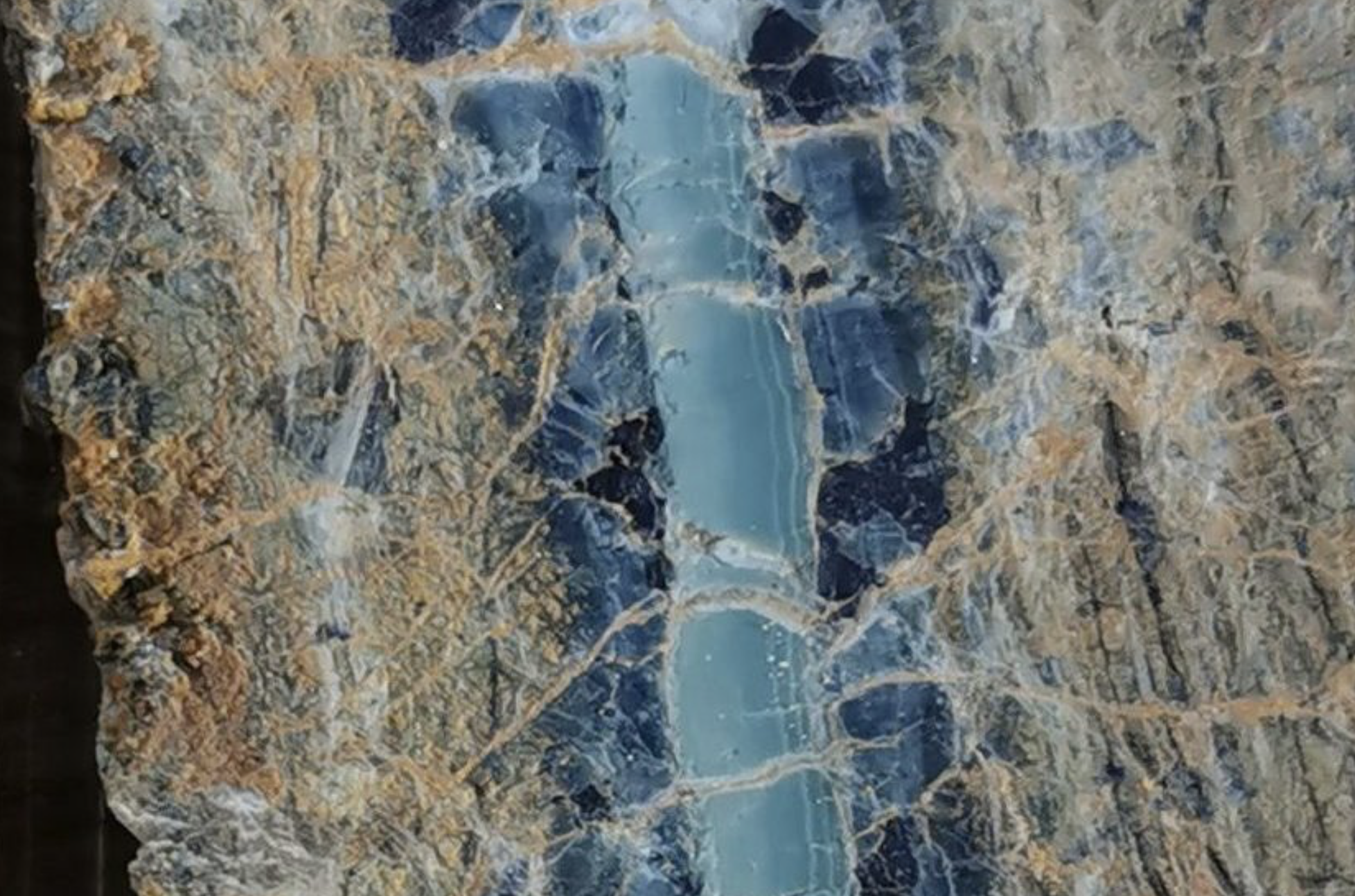
Pure white coarse-grained halite shear zones rich in CO2 with elliptical blow-out hole in the roof of the mine gallery caused by overpressured gas (Loulé salt mine, Portugal).
Course Characteristics
Physical requirements: Easy: Participants will be required to walk a maximum of XXXX km at each locality, over relatively easy steep???? terrain. Not recommended for claustrophobic individuals (visit to mine).
Duration: 4 days
Type: Fieldwork, seminars and workshops
Meeting Point: Estepona, Spain (Monday, 12th late afernoon)
Ending Point: Albufeira, Portugal (Friday, 16th late afternoon)
Area: Southern Spain (Malaga, Andalucia) and Southern Portugal (Central Algarve)
Target audience: Natural Hydrogen Industry and Researchers, Underground Energy Storage Professionals, Geologists, Structural Geologists, Petroleum Geologists, Geophysicists, Mining Geologists and Engineers.
Pre-requisites: General geological concepts, XXX
What’s included: Transportation, meals, accommodation in 4 star hotels, digital and paper field guide, personal insurance, IPE (Hardcap, reflective vest and walking poles).
Number of participants: Minimum of 10 and maximum of 16 persons.
Course Cost: 4000 € (excl. tax)
Instructors
Carlos Garrido: XXXXXXX Researcher IACT-CSIC, Granada, investigates the processes involved in the formation and differentiation of the Earth’s oceanic and continental lithospheres, their interaction with the hydrosphere –and associated biogeochemical cycles– and the elemental cycles involved in the subduction of the hydrated lithosphere. I am also interested in analytical geochemistry; in particular, the development of geochemical tracers (trace elements, stable and radiogenic isotopes) of natural and environmental processes, and LA-ICP-MS U-Th-Pb geochronology.
Pedro Barreto: Founder of Geo Logica, graduated in Geology from University of Lisbon and MSc in Tectonics from Royal Holloway, University of London. Former Senior Structural Geologist at CGG - NPA Satellite Mapping, developed geological mapping for oil, gas and mining exploration in Europe, Africa, Middle East, South America and Asia. Former Senior New Ventures and Exploration Geologist at Partex O&G, was Lead Project Geologist for Portugal and Africa exploration. Co-authored several publications and presentations on rifting and salt-tectonics, and implications on exploration, development and exploitation of natural resources for energy production and storage.
Tiago Cunha: Degree in Geology from Lisbon University (PT) and PhD in Marine Geophysics from Oxford University (UK). 15+ years’ experience in basin and petroleum systems modelling in sedimentary basins around the world combining a wide range of observational and modelling techniques, integrating geological, geophysical and geochemical data. 10+ ISI publications and numerous presentations at international meetings. Currently working at I.G.I Ltd, focused in the tectonic and thermal evolution of sedimentary basins and its implications for the petroleum systems. Promoting and developing novelty research and applications for the natural hydrogen and CCS industries.
Javier Garcia Pintado: Scientist at MARUM - Center for Marine Environmental Sciences, University of Bremen, focus on interactions between Tectonics and the Submarine component of the Water Cycle (hydrothermal systems, fluid-rock interactions, mechanisms of hydrogen generation and migration), Water Cycle and Climate. Also develops with in geodynamic, fluid dynamics, Earth System Modelling, data assimilation & inverse methods, Earth Observation and flood forecast and Software development and High Performance Computing.
Main Topics
Identify H₂ source rocks and recognize different serpentinization types and degrees;
Understand the geophysical signatures of serpentinized ultramafic bodies
Observe active serpentinization systems and associated gas emissions
Evaluate H₂ transport mechanisms and fluid pathways.
Understand the concepts of conventional reservoir and seal and how these apply to hydrogen trapping.
Understand the main concepts and problematics related to Underground Hydrogen Storage inside salt structures.
Observe the internal composition, heterogeneities and structure of a salt structures inside a salt mine.
Main geological and geomechanical aspects to consider, from area screening to project implementation, when planing UHS inside salt structures.
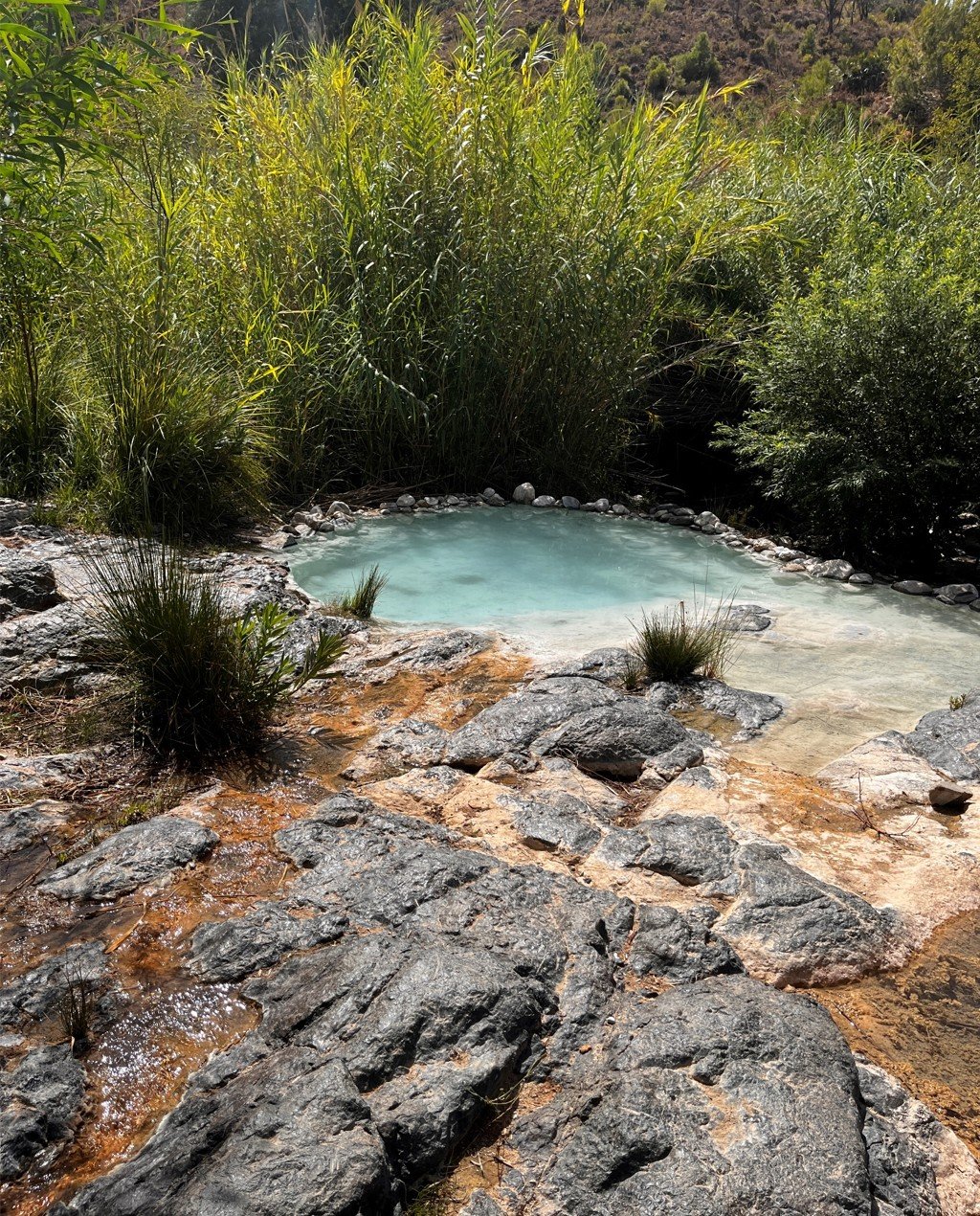
Travertine deposits and carbonate precipitation at gas-bubbling hyperalkaline serpentinization-related spring (Ronda Massif, Spain).

Boudinaged ultrabasic lamprophyre dyke with ‘jigsaw’ breccia and halite filling veins (Loulé salt mine, Portugal).
Program
Day 1 - SOURCE ROCKS, SERPENTINIZATION TYPES AND GEOPHYSICAL SIGNATURES
-
Introduction to ultramafic source rocks for H₂ generation
Serpentinization types: lizardite vs. antigorite vs. chrysotile domains
Degrees of serpentinization and their petrographic recognition
Geophysical signatures: magnetic anomalies, density contrasts, seismic properties
Integration of geological and geophysical data for subsurface characterization
-
Field traverse across the Ronda Peridotites: harzburgites, lherzolites, dunites
Recognition of serpentinization fronts and mineralogical changes in outcrop
Magnetite distribution as indicator of H₂ production potential
Practical exercise: estimating serpentinization degree from field observations
Discussion: linking outcrop observations to geophysical responses.
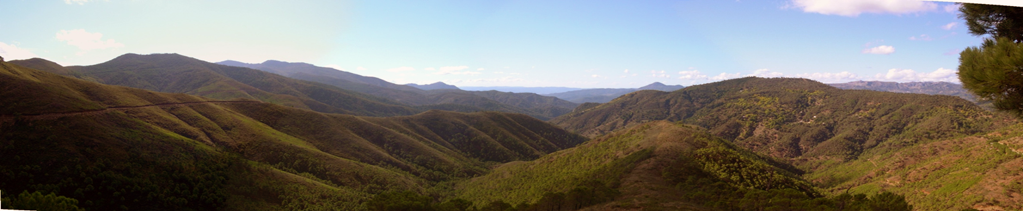
Panorama of Ronda peridotites.
Day 2 - ACTIVE SERPENTINIZATION, GAS EMISSIONS AND TRANSPORT
-
Visit to hyperalkaline springs (pH greater than 11) associated with ongoing serpentinization
In-situ gas measurements and water sampling demonstration
Observation of travertine deposits and carbonate precipitation
Fluid pathways: structural controls on gas migration
Discussion: residence times, gas signatures, and indicators of active H₂ generation.
-
H₂ transport mechanisms: diffusion, advection, and structural conduits
Trapping conditions and seal integrity for natural hydrogen accumulations
Thermodynamic modeling: predicting H₂ vs. CH₄ stability (Perplex demonstration)
Wrap-up: transferable exploration criteria for H₂ in ultramafic terrains
Q and A and future collaboration opportunities.
Bubbling gas from spring near Estepona.
Temperature and PH measurements at serpentinite alkaline spring near Estepona.
DAY 3 — Conventional reservoir and seal properties and related trapping mechanisms
-
5 hours drive with lunch break during the journey.
Discussion regarding concepts learn during Day 1 and 2.
General introduction to the Algarve Basin.
-
Field section along the Albufeira diapir at Praia de S. Rafael: Miocene and Pliocene carbonates, sandstones and shales.
Recognition of reservoirs and seals on outcrops, 3-way closures against faults and/or salt structures.
Structural traps vs stratigraphic traps.
Practical exercise: STOIIP Vs Recoverable Reserves and the implications of the recoverable factor (RF).
Discussion: observe the geometries and variations of different rock types and its implication in reserves calculation. Differences and similarities with H2-bearing reservoirs.
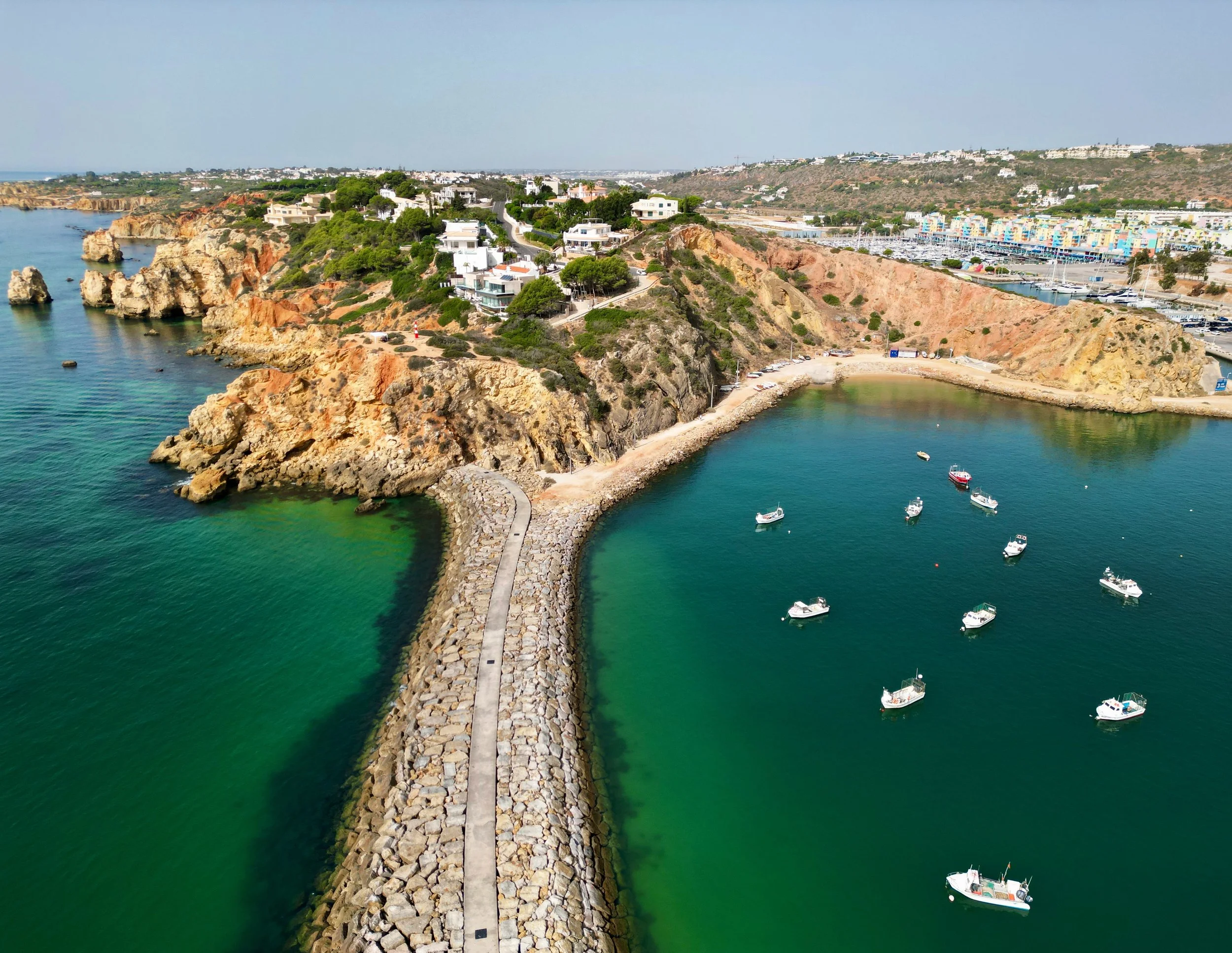
Aerial view of Albufeira Diapir with gypsum cap rock and overturn flank with flap geometry.
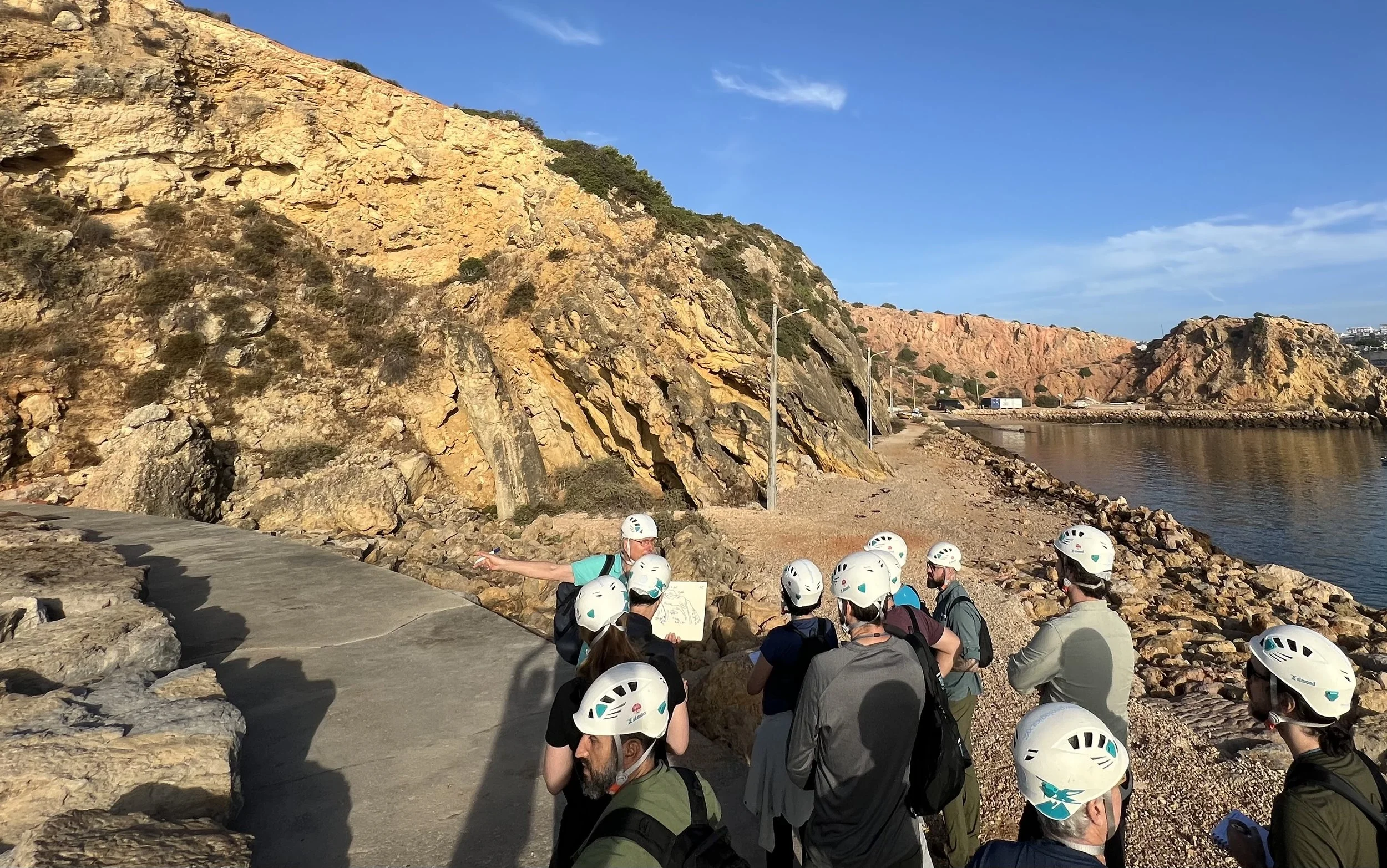
Reservoir and seal units at overturned flank of Albufeira Diapir at Praia da Baleeira.
DAY 4 (Tuesday) — concepts and problematics related to Underground Hydrogen Storage inside salt structures
-
Observe the composition of layered evaporitic sequences and how are formed.
Observe intra-salt heterogeneities (clastic and carbonate stringers and igneous dykes).
Observe gases and organic matter trapped inside salt.
Observe and quantify intra-salt deformation (ductile and brittle).
Observe lateral caprock breccia in the interface between salt and surrounding rocks.
Understand fluid flow and thermal variation adjacent to salt structures.
-
Main concepts of UHS inside salt structures.
Screening and selection of suitable salt structures for UHS.
Data and methodologies during project site assessment.
Drilling hazards and fluid/water management during development of salt caverns.
Geochemical and biochemical reactions between salt, fluids/water and H₂ its implications on infrastructures and cavern management.
Subsidence prediction and monitoring during project life.
Abandonment and decommissioning of salt caverns.

Intra-salt boudinaged clastic stringer in Loulé Salt Mine.
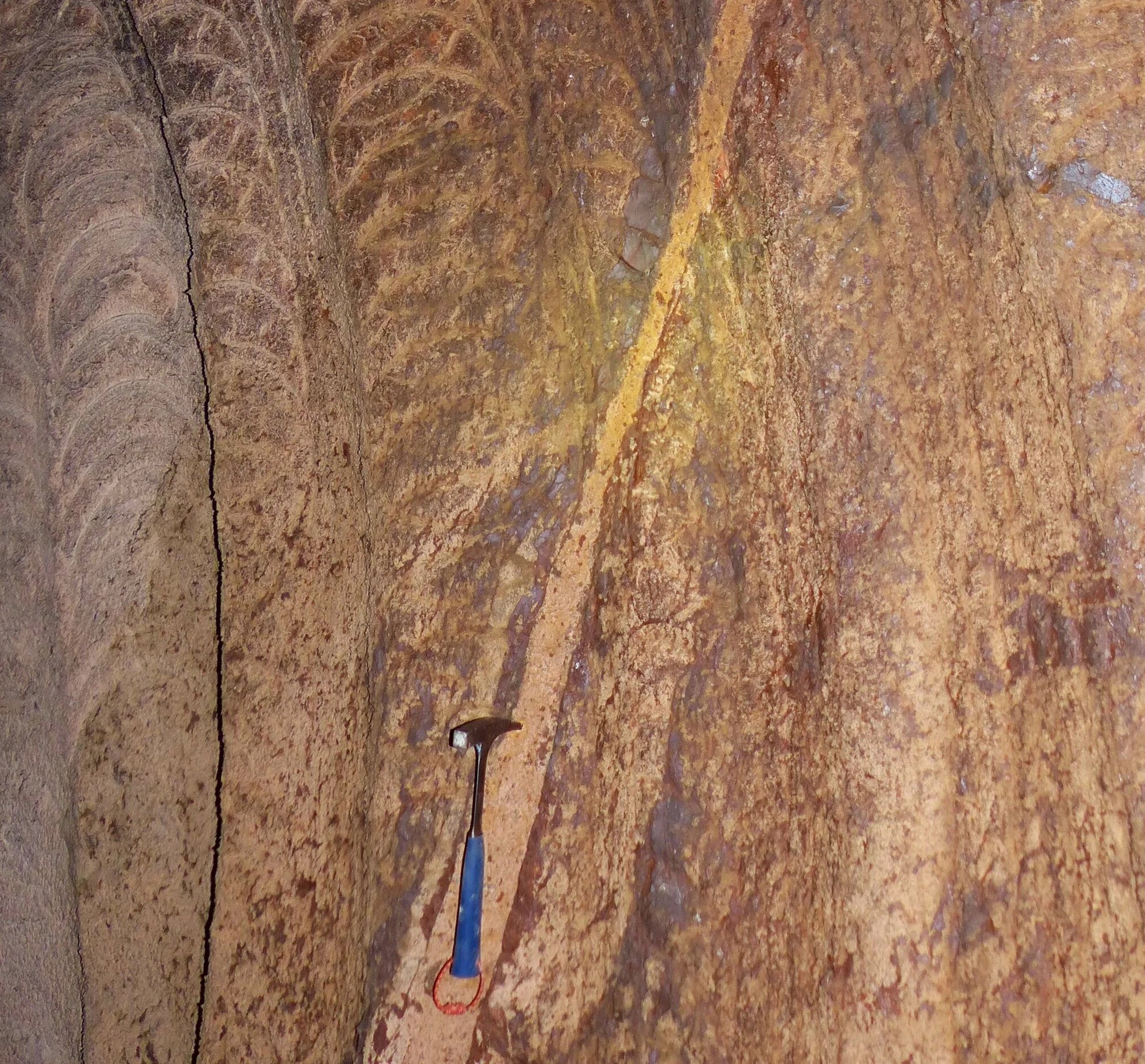
Brittle fault with red clay fragments in halite at Loulé mine.
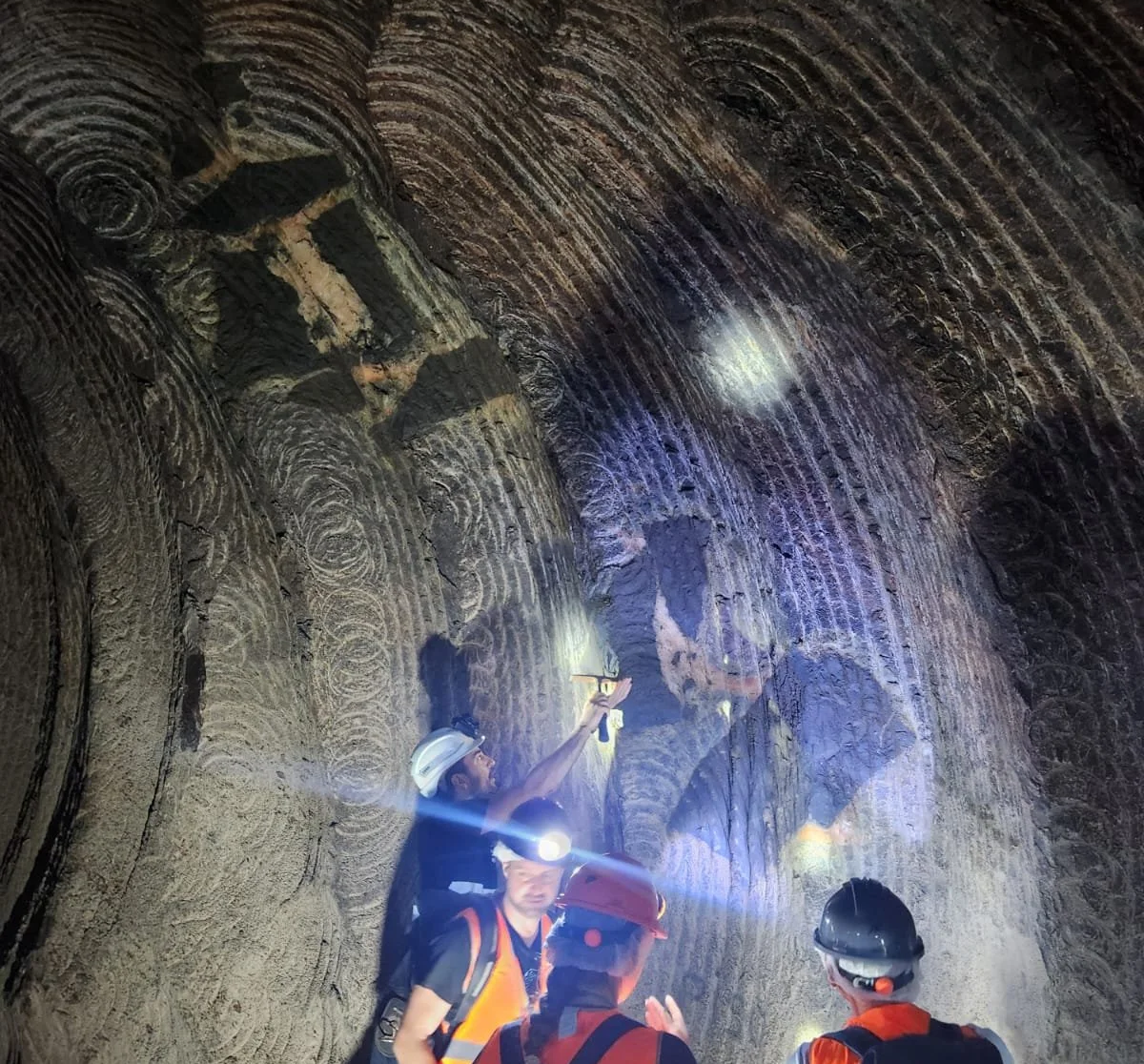
Intra-salt boudinaged mafic dyke in Loulé Salt Mine.
References
García-Pintado, J., Cunha T.A., Pérez-Gussinyé, M., Nuzzo, M. 2026. Insights from Full-Physics Numerical Models on the Migration and Trapping of Geological Hydrogen in Sedimentary Basins. EAGE-2026, Aberdeen.
García-Pintado, J., Cunha T.A., Pérez-Gussinyé, M., Nuzzo, M. 2025. New Insights from Advanced Modelling of Natural Hydrogen Generation and Migration. H-Nat, Paris.
Davison, I., Barreto, P. & Andrade, A.J.M. (2016). Loulé, the anatomy of a squeezed diapir, Algarve Basin, southern Portugal. Journal of the Geological Society, London, 174, 41–55.
Davison I & Barreto, P. 2019. Salt tectonics and hydrocarbon accumulations trapped on diapir flanks in the Lusitanian Basin, Portugal. Salt Tectonics, Associated Processes, and Exploration Potential: Revisited 1989-2019. GCSSEPM Annual Perkins Rosen Research Conference, Salt Tectonics, electronic files only, p. 300-313.